
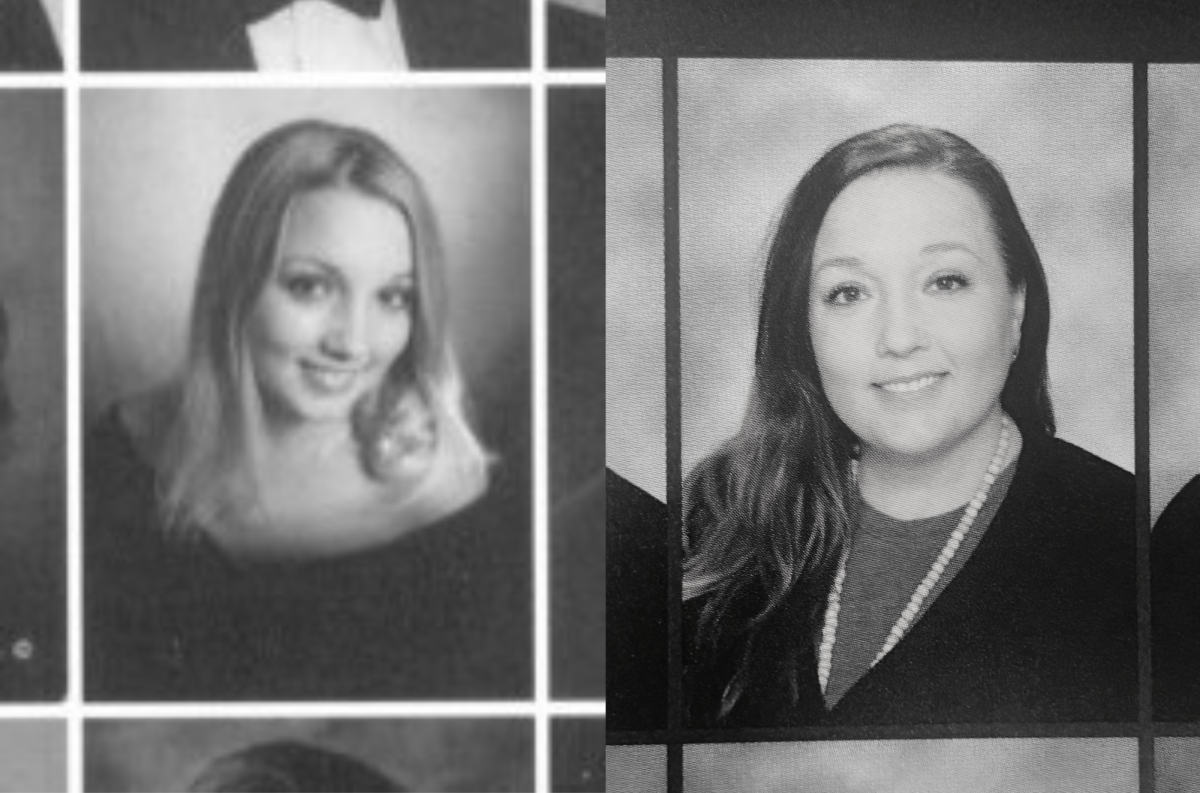
For Principal Mary M. Grupe, leaving Hickman High School is not just a career change. It is personal, reflective and deeply tied to the person she has become since once walking the same halls as a student herself.
In March, Grupe announced she would leave her role as principal at the end of the 2025-2026 school year to become Director of Student Support for Columbia Public Schools. While many students and staff members saw the announcement as the departure of a school leader, Grupe described the decision as the result of years of internal growth, reflection and questioning the expectations she has built her life around.
“I took the job at Hickman thinking I was going to stay till I retired,” Grupe said. “I think that version of life could have been really good.”
But over time, Grupe said she began reevaluating what fulfillment, identity and purpose looked like outside of achievement and expectation.
“One of the things about my own internal growth is to think about ego, and quality of life and what I’m interested in,” Grupe said.
She described her decision as a part of “a path of liberation,” particularly as a midwestern woman raised to prioritize responsibility, performance and the expectations of others over herself.
“I had a couple experiences that really brought me to understand that no one is going to come do it for me, or to consider my own interest or worth or want if I wasn’t going to put it at the forefront,” Grupe said.
For Grupe, the transition is especially emotional because Hickman has never simply been just a workplace. Before becoming principal, she was a student there. Her family’s history is connected to the school and many of the same tensions and inequities she witnessed as a teenager still exist today.
“As somebody who graduated from here or is from here, the injustices, the negatives, the slights, the hardships are more personal,” Grupe said.
She said leaving has forced her to confront both the optimism and disappointment tied to returning to lead the place that helped shape her.
“I’m having to talk to my 17-year-old self and my 43-year-old self about progress being small and that small steps forward are still worth it,” Grupe said.
Grupe returned repeatedly to the idea of ego – not in arrogance, but in the sense of identity, self-worth and the pressure people place on themselves to fulfill a role. She said much of her reflection centered around realizing she could pursue work that fulfilled her personally, even if it conflicted with what others expected from her.
“This investigation of ego, this position of liberation for my identity as a woman and then a very specific job that’s connected to the things I really like came together all at once,” Grupe said.
While school leadership is often measured publicly through rankings, achievements or visibility, Grupe said the work she values most is quieter and often unseen.
“The work of a principal is upfront and flashy [for] like a third of it,” Grupe said. “The other two-thirds is really preventing really horrible things from happening or mitigating the negative outcomes of horrible things that have happened.”
When asked what she is most proud of from her time at Hickman, Grupe did not mention awards, programs or accomplishments. Instead she spoke about students feeling cared for.
“I’m most proud that I believe students know that I care about them,” Grupe said.
She said many of the decisions she made as principal came from prioritizing students, even when it created tension with adults or challenged systems already in place.
“I’ve made decisions based on what’s best for kids, even if it made me unpopular with groups of people who are losing the privileges that they enjoyed,” Grupe said.
In her new role, Grupe will oversee programs connected to students facing some of the district’s greatest behavioral and academic struggles. The position includes working with restorative practices, behavior intervention systems, de-escalation training and outside organizations, including the juvenile office.
Grupe said she is looking forward to focusing more directly on students and systems rather than managing the expectations and behaviors of adults.
“One of the things I loved about being an assistant principal and loved about being a teacher was that people who are between the ages of 15 and 18 are actively growing and changing,” Grupe said.
She contrasted that growth with adulthood, which she described as more rigid and difficult to shift.
“With adults, those habits and needs are much more ingrained and harder to move,” Grupe said.
As the conversation turned toward Hickman students, Grupe’s answers became less focused on herself and more focused on what she sees in the current generation.
“The best part of Hickman is the students, and it’s always been,” Grupe said.
She said despite national anxieties surrounding teenagers and the future, working with students every day has left her hopeful rather than fearful.
“You all are more authentically yourselves than any generation that’s ever existed,” Grupe said. “You’re more likely to question the systems that govern you than maybe any generation has ever existed, and that gives me hope.”
Grupe encouraged students to continue questioning institutions, expectations and systems around them instead of accepting them blindly.
“You should be yourselves,” Grupe said. “You should question the systems around you.”
Although conversations surrounding departing principals often center around legacy, Grupe pushed back against the idea that schools should revolve around individuals.
“We could benefit from less worship of individuals and more focus on the issues that are negatively impacting our students every day,” Grupe said.
Instead of wanting to be remembered as the defining figure of students’ high school experiences, Grupe said she hopes she simply helped students when they needed it most.
“Our goal isn’t to be the center of your world,” Grupe said. “We should be a little blip or dot in your radar who, when you needed us, we were there.”