Joint Security Area: A First Pass at Filmmaking
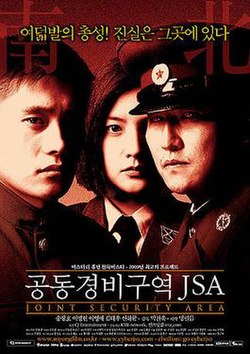
Park Chan-wook is a South Korean filmmaker known predominantly for his high-stakes thrillers and mystery productions. Now renowned for his cinematography and the quality of his work, Park was not initially met with such success. Following two poorly performing films in the 1990s, Park worked as a critic to support himself until the release of his third directorial piece. The picture that Park prefers to be considered his directorial debut is perhaps his most human creation. Joint Security Area premiered in South Korean theatres in 2000, and thrust Park into the limelight with this tale of brotherhood beyond political ties.
Following an initially gruesome crime scene, the film opens with an investigation conducted by a neutral Swiss military commander, Major Sophie Jean (Lee Young-ae). Jean is inquiring regarding an altercation between southern and northern soldiers at an intersection of the country’s border (the namesake of the film).
The plot in the first act is quite straightforward, your typical criminal drama. This segment primarily follows Jean through her investigation. Jean, who is half Swedish and Korean, serves as an embodiment of the film’s message, that the divide between the North and South Korean people is futile in standing.
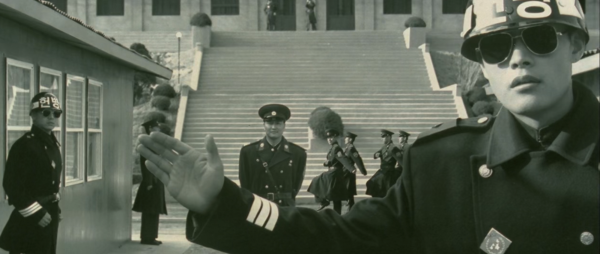
The narrative then abruptly changes to the past. Focusing on the four soldiers – two North Korean, Sgt. Oh Kyeong-pil (Song Kang-ho) and Jeong Woo-jin (Shin Ha-kyun), two South Korean soldiers, Sgt. Lee Soo-hyeck (Lee Byung-hun) and Nam Sung-shik (Kim Tae-woo). Despite the initial hostility between the men, they soon form inalienable friendships beyond their political allegiances. The men, through their secret meetings where they trade stories and play games, expand their perception of ‘the other side’ and are capable of perceiving one another as not monstrous enemies, but people.
Park’s work takes great initiative to avoid demonizing one side or the other, instead recognizing the inherent humanity of the characters. There is no particular character who is without a fleshed-out and focused purpose. I found the performances, particularly those of Lee Young-ae and Lee Byung-hun, to be emotionally gripping. The editing of the film is well contrived, as is typical of Park’s work, and the music is entirely haunting, fitting for a tale of its nature. The narrative delivers on its intentions. The film was presented to North Korean leader (dictator) Kim Jong II by South Korean President Roh Moo-hyun during a 2007 summit.
Joint Security Area is not Park’s most bombastic or outrageous film, but it is certainly his most human. The tale of a group of people who are divided merely by where they stand at an invisible line concludes with an endearing theme. It calls upon us, the viewer, to look beyond our differences and instead to what makes us similar. The inalienable station of being human.

No Other Choice: A Thrilling Korean Dark Comedy Worth Seeing
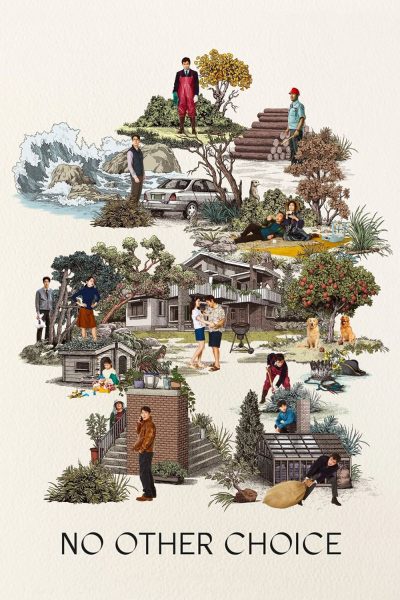
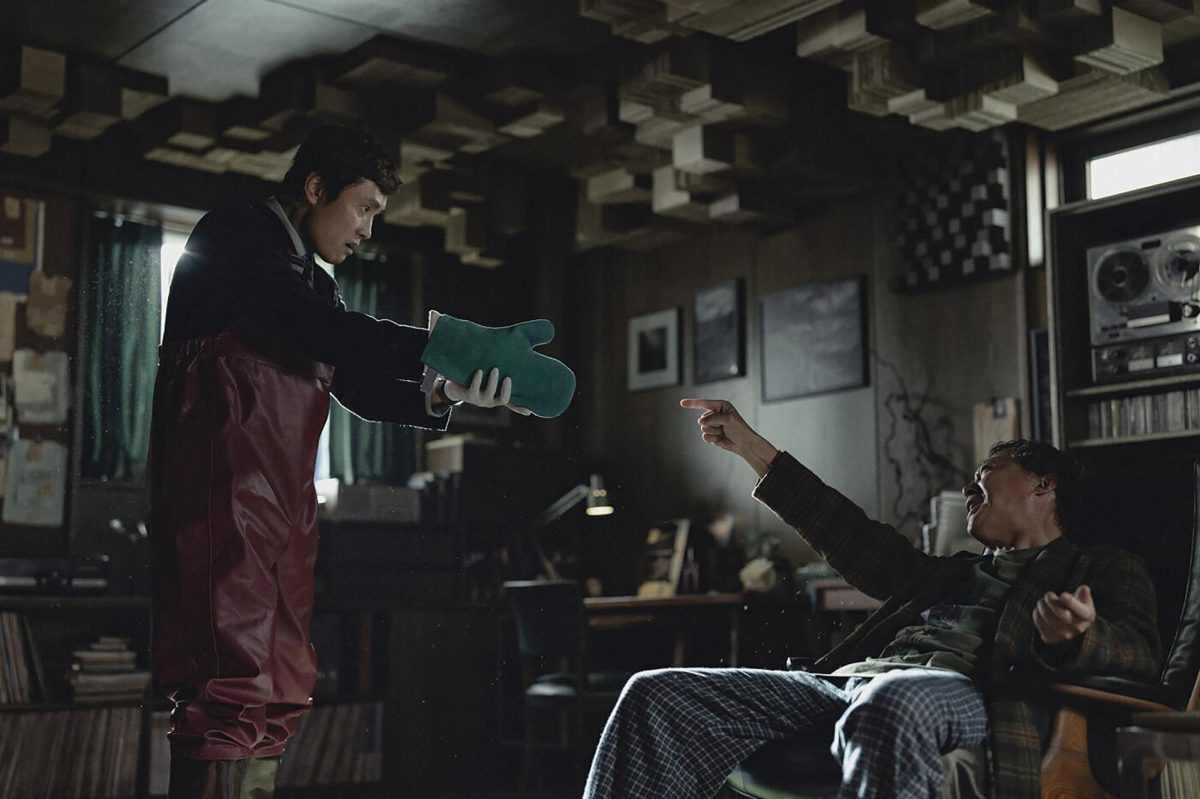
“No Other Choice” is a dark comedy and the most recent film by the South Korean director Park Chan-wook. Known for projects such as “Oldboy” (2003), the director’s work is marked by absurd yet brilliant scenes, creative writing and social commentary. The 2025 film bears its directors markings well and lives up to Chan-wook’s reputation of bizarre premises and creative cinematography tied together by good writing.
The plot follows Yoo Man-soo (you might know the actor from “Squid Game”), a manager at a paper plant who has just been laid off. Faced with a brutally competitive job market, piling bills, and the loss of his dignity, Yoo Man-soo resorts to killing the people competing for the job he wants. The movie takes this premise and runs with it delivering an experience that is tense, thoughtful and even funny at the same time.
Throughout the film, there are many creative, well-executed and memorable scenes. This, to me, is the film’s greatest strength. From absurd and thrilling scenes like Yoo Man-soo’s first murder attempt gone awry to comedic moments, like a botched first interview, to somber ambience, exemplified by the final scene in an automated paper factory the movie truly captures a wide range of feelings.
The soundtrack also stands out as a strength of the film. The aforementioned scenes are all better by their choice of music. At the end of the film, where Yoo Man-soo’s daughter plays a cello solo is a great example of this.
Up until that moment, neither the family nor the audience had seen the daughter, who is said to be a child prodigy by her teacher, play. At the end of the film, she plays, but instead of bringing excitement and pride out of her family, she brings solace to her mother, who has just lived through her husband giving his humanity away for a job. The solo is eerie yet calming, and it is played over Yoo Man-soo’s first day at his new job, which he just murdered for, overseeing an automated paper factory.
A beautifully dark solo highlights the cold, liminal feeling that is already given off by the factory that is devoid of people except for Man-soo. This brings out a feeling that while the protagonist achieved everything he wanted materially and may seem happy, the inner price he paid was insurmountable.
The best scene comes in the first half of the movie when Yoo Man-soo tries to kill one of the competitors for his job. Things go awry when the man’s wife comes in right as Man-soo is about to shoot, and hits him in the head with a trophy. Chaos ensues as everyone scrambles for the gun, making for a thrilling, comedic, and brilliant moment which I won’t spoil any more of. The scene is topped off by the blaring of “Redpepper Dragonfly” by Cho Yong Pil, heightening the absurdity and drama of the situation. Both of the aforementioned scenes are great on their own, but when the music is added, they are brought to life.
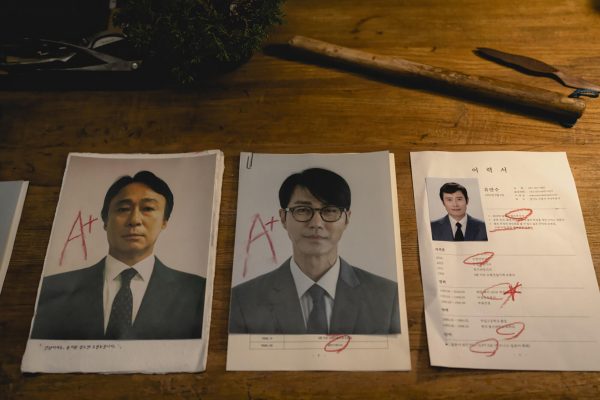
While being funny, creative and well executed, “No Other Choice” also provides great commentary on modern work culture. The film uses the paper industry to show the absurd devotion many people hold towards their careers. Yoo Man-soo gives up his dignity, his morals and even family just for a job overseeing paper production. The industry is mythologized extensively by both the protagonist and his competitors to seem like an art form that is deserving of the highest form of respect.
But how are the characters rewarded for their devotion? They get laid off without a second thought, given no real reward for their loyalty, and are forced to claw at each other’s throats for a job. This shows a disconnect in the modern corporate world between workers and higher-ups, not only in South Korea, where the film takes place, but in the United States as well. Workers are expected to give their lifeblood to the company, working long hours, missing their families, purpose, status and money.
This devotion is only exploited by the faceless, machine-like system of executives that run these industries. At the end of the day, profit is what they are devoted to, and any human benefits are not goals, merely an upside. They have no issue working their employees into the dirt, capitalizing on the hypercompetitive work environment to get more from them for less money, and letting longtime employees go at a moment’s notice to save money.
“No Other Choice”, while absurd, portrays this message well while also showing how when the human desire for purpose is overattached to something material, the floodgates are opened for a loss of humanity and dignity.
To wrap things up, “No Other Choice” is a creative, thrilling, and well-made film. Not only is it entertaining, but the movie also has something to say, and leaves its viewers thinking about what people are willing to do for the mundanity of work and about the dangers of relying on the outside world for purpose. This is one of the best movies that came out in 2025, and it definitely deserves a watch.